Hospitality Bathroom Design, Fixtures, Hygiene & Specification Resource
We are structured as an educational authority resource for architects,
designers, engineers, developers, hotel owners, procurement teams, and facility managers
planning hospitality bathrooms, guestroom showers, public restrooms, and commercial-grade
fixture systems.
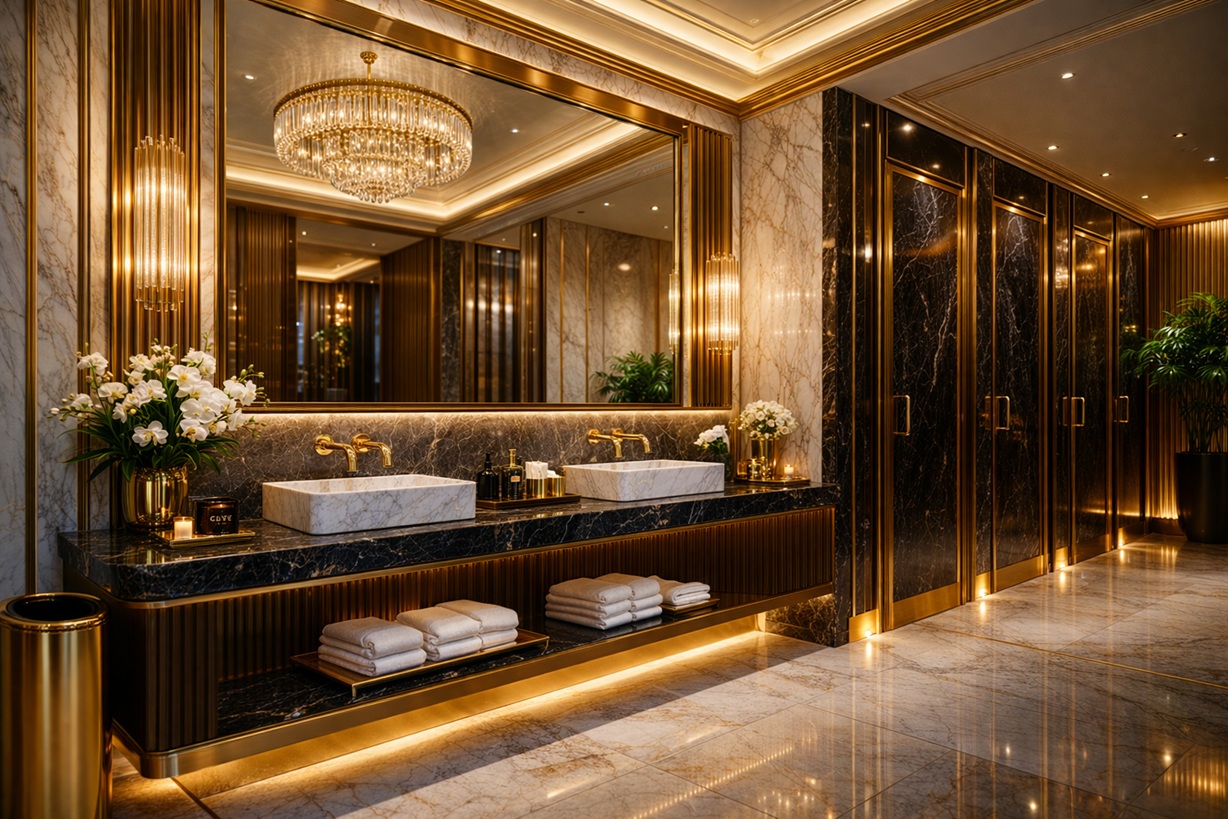
Hospitality Bathroom Brand Resources
Our brand resources for AEC research, specification comparison, and hospitality
bathroom planning. Inclusion does not imply endorsement, certification, partnership, or ranking.
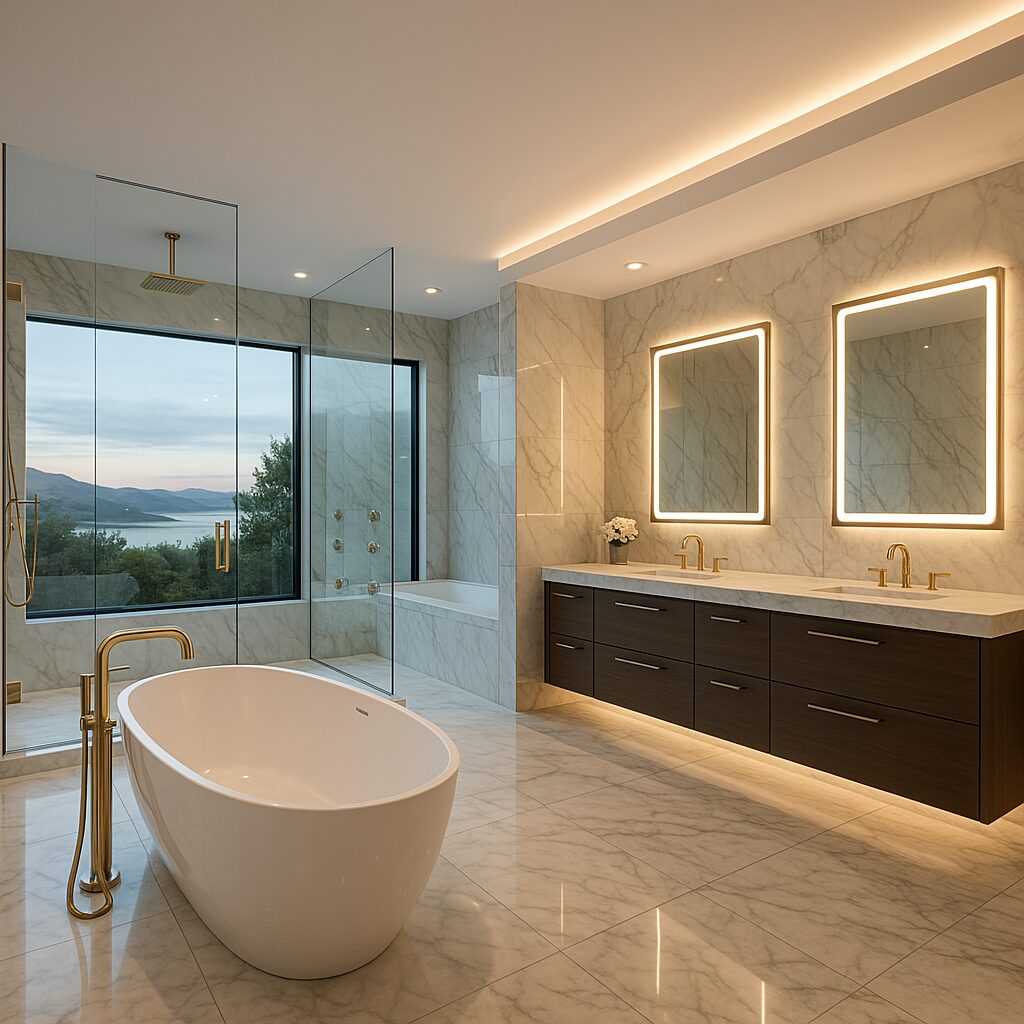
Hospitality Bathroom Design
What is hospitality bathroom design?
Hospitality bathroom design is the planning of hotel, resort, spa, cruise, serviced-apartment,
and mixed-use bathroom spaces as high-performance environments. It balances guest comfort,
visual luxury, hygiene confidence, accessibility, durability, water efficiency, cleaning reality,
and long-term maintenance.
Read more about AEC bathroom planning
For AEC teams, hospitality bathrooms should not be treated as decorative afterthoughts.
The bathroom is a compact technical system involving waterproofing, ventilation, lighting,
plumbing, drainage, finish durability, fixture reliability, guest usability, and service access.
A well-designed bathroom supports both the brand experience and the asset’s lifecycle cost.
Why are bathrooms critical to hospitality brand perception?
Bathrooms strongly influence how guests judge cleanliness, quality, and operational competence.
Guests notice water pressure, shower temperature, mirror lighting, drainage, grout lines,
faucet feel, and finish condition almost immediately.
A premium bathroom can elevate the perceived value of a room, while a leaking faucet,
stained finish, poor lighting, or unreliable shower can quickly damage reviews and return intent.
How has the role of hotel bathrooms evolved?
Hotel bathrooms have evolved from purely functional wet rooms into wellness-driven,
experience-focused spaces. Modern hospitality bathrooms often include spa-like showers,
layered lighting, warmer materials, quieter acoustics, touchless fixtures, and refined
finish coordination.

Hygiene & Touchless Technology
Why is hygiene-forward design important in hospitality bathrooms?
Hygiene-forward design improves guest confidence by reducing visible maintenance issues,
minimizing shared touchpoints, and making cleaning easier for housekeeping teams.
Smooth surfaces, fewer crevices, reliable drainage, touchless fixtures, and durable finishes
all support cleaner-looking and cleaner-performing hospitality bathrooms.
Are touchless faucets recommended for hospitality bathrooms?
Touchless faucets are especially useful in public hospitality restrooms, lobby washrooms,
restaurants, airports, conference centers, spas, and other high-traffic areas. They support
hands-free hygiene, reduce unnecessary water use, and create a modern commercial restroom
experience.
For guestrooms, touchless faucets should be reviewed based on sensor reliability, power source,
maintenance access, user expectations, and the property’s design standard.
Read more about sensor fixture specification
AEC teams should evaluate activation range, false-trigger resistance, AC/DC or hybrid power,
sensor window placement, solenoid access, battery replacement logistics, aerator performance,
splash behavior, and compatibility with commercial cleaning routines.
What role do automatic soap dispensers play?
Automatic soap dispensers improve hygiene perception and reduce manual contact in hospitality
restrooms. In commercial applications, they should be specified for refill efficiency,
anti-drip performance, sensor accuracy, reservoir access, finish durability, and compatibility
with housekeeping workflows.
Fixtures, Faucets & Water Experience
Why do fixtures matter so much in hospitality bathrooms?
Fixtures are high-frequency guest touchpoints. Faucets, showers, valves, drains, mirrors,
soap dispensers, and accessories shape the guest’s daily ritual. A faucet that splashes,
a shower that fluctuates in temperature, or a loose-feeling control can make an otherwise
beautiful bathroom feel poorly engineered.
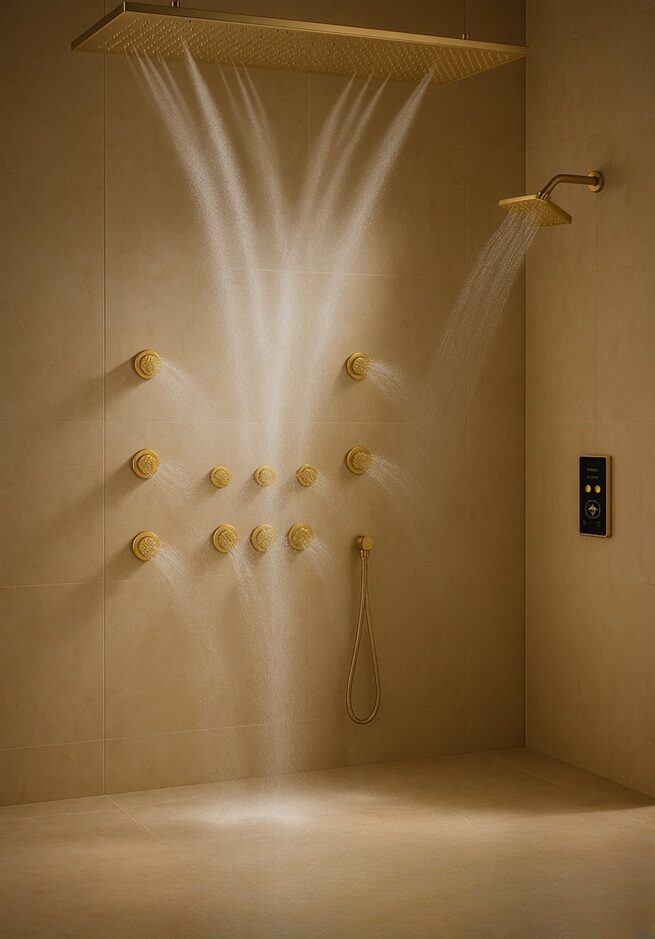
How should AEC teams evaluate shower systems?
Shower systems should be reviewed for pressure balance, thermostatic control, anti-scald
protection, spray coverage, water consumption, valve access, finish durability, guest comfort,
cleaning compatibility, and replacement-part availability.

How do fixture choices affect operating cost?
Fixture choices affect water consumption, service calls, replacement frequency, room downtime,
housekeeping labor, and guest complaints. The lowest-cost fixture is not always the lowest
lifecycle-cost fixture.
Commercial-grade cartridges, reliable sensor systems, durable coatings, easy-access valves,
and standardized parts can reduce long-term maintenance costs across large hospitality portfolios.
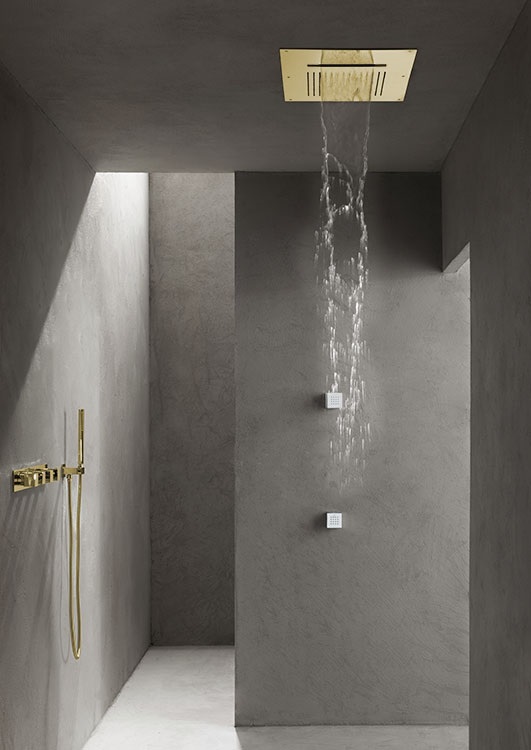
Spa-Like Sensory Design
What is sensory bathroom design?
Sensory bathroom design shapes light, sound, texture, temperature, water delivery, and spatial
calm. It turns the bathroom into a restorative guest ritual rather than a purely functional room.
How does lighting affect hospitality bathrooms?
Lighting affects perceived cleanliness, grooming comfort, material quality, and emotional tone.
Hospitality bathrooms benefit from layered lighting: ambient lighting for calm, vertical mirror
lighting for grooming, accent lighting for depth, and low-glare night lighting for safety.
Why are materials and textures important?
Materials communicate quality through touch and visual depth. Porcelain, engineered stone,
solid surface, stainless steel, warm metal finishes, textured tile, and matte surfaces can
create a premium impression when paired with durable installation details and cleaning-compatible
finishes.

Durability, Materials & Cleaning Reality
What makes a fixture hospitality-grade?
A hospitality-grade fixture should offer reliable daily performance, durable materials,
commercial-quality valves or sensors, finish stability, replacement-part availability,
service access, and compatibility with high-use environments.
Which finishes work best for hospitality bathrooms?
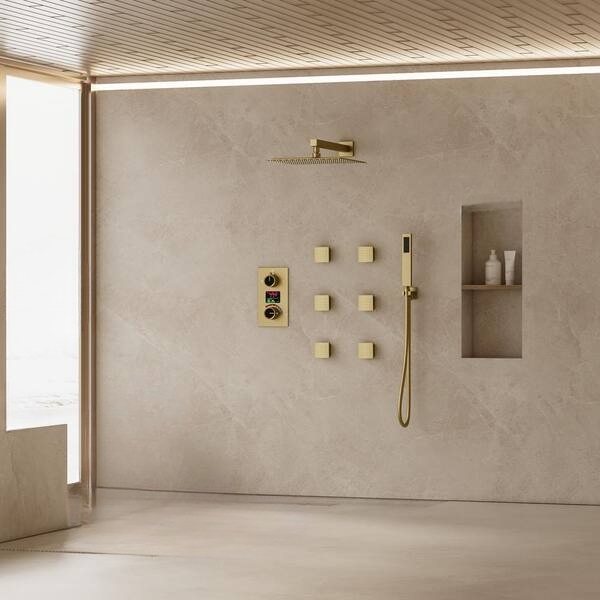
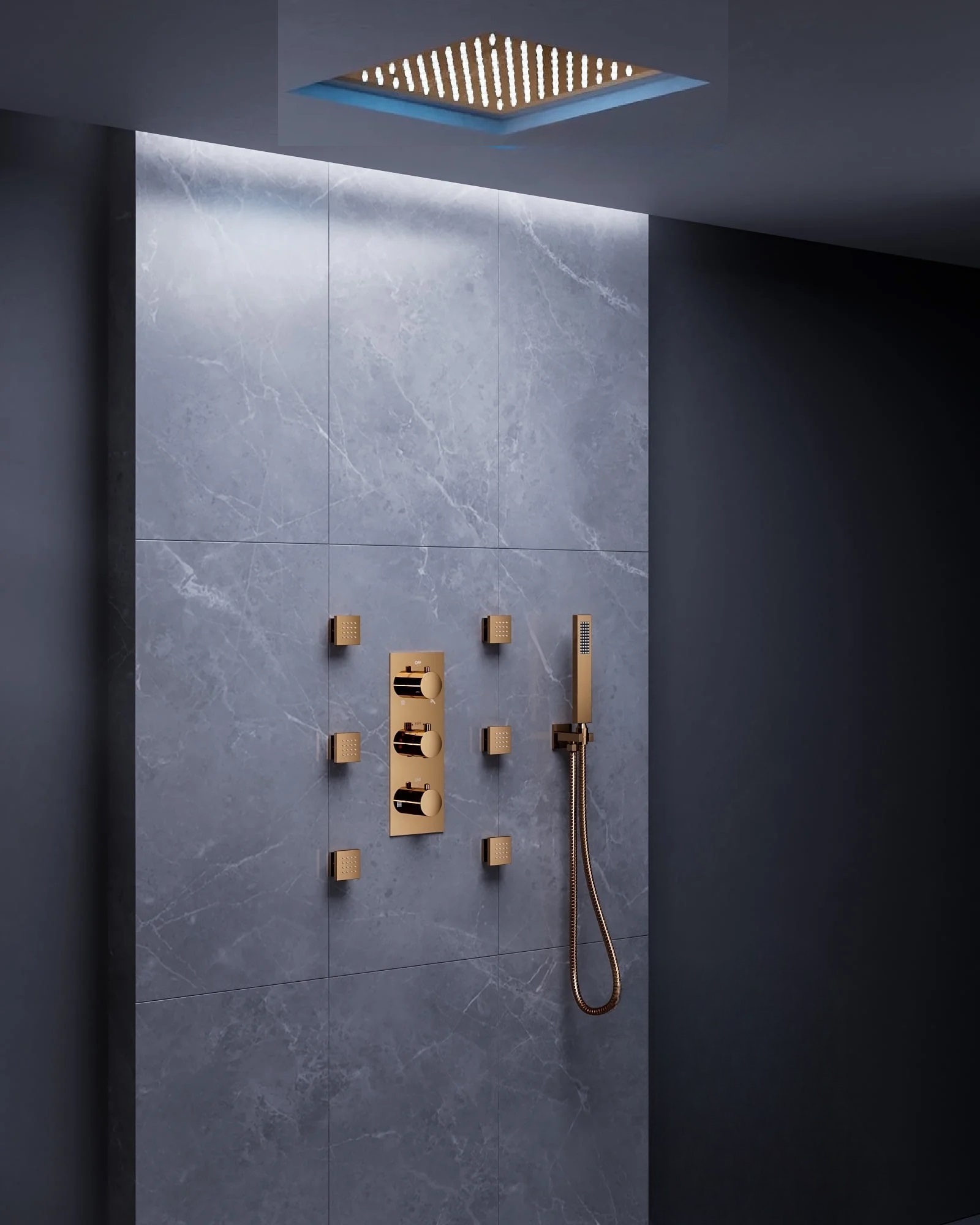
Chrome, brushed nickel, stainless steel, matte black, brushed gold, and oil-rubbed bronze
are common hospitality finishes. The best finish depends on cleaning chemicals, water
chemistry, brand identity, traffic level, and long-term replacement availability.
AEC teams should test finish samples against actual housekeeping chemicals before final
specification, especially for high-touch fixtures and public restroom areas.
How do cleaning protocols affect material selection?
Hospitality cleaning is more aggressive than residential cleaning. Materials must tolerate
disinfectants, repeated wiping, humidity, hard water, and abrasion. A surface that looks
premium on opening day but cannot survive daily cleaning may create long-term brand damage.
Water Efficiency, Sustainability & ESG
Why is sustainability important in hospitality bathrooms?
Bathrooms are major drivers of water and energy use in hotels. Sustainable bathroom design
can reduce water consumption, hot-water energy demand, waste, replacement cycles, and
operating costs while supporting guest comfort and ESG reporting.
Can hotels reduce water use without hurting guest experience?
Yes. Hotels can reduce water use through pressure-compensated faucets, efficient showerheads,
leak detection, calibrated touchless fixtures, stable mixing valves, and commissioning of
installed flow rates.
Comfort depends on temperature stability, spray coverage, and rinsing performance — not only
on gallons per minute.
How do bathrooms affect long-term asset value?
Durable bathrooms reduce renovation frequency, service calls, guest complaints, water waste,
and room downtime. Investors and owners benefit when bathroom specifications support measurable
lifecycle performance rather than only first-cost savings.
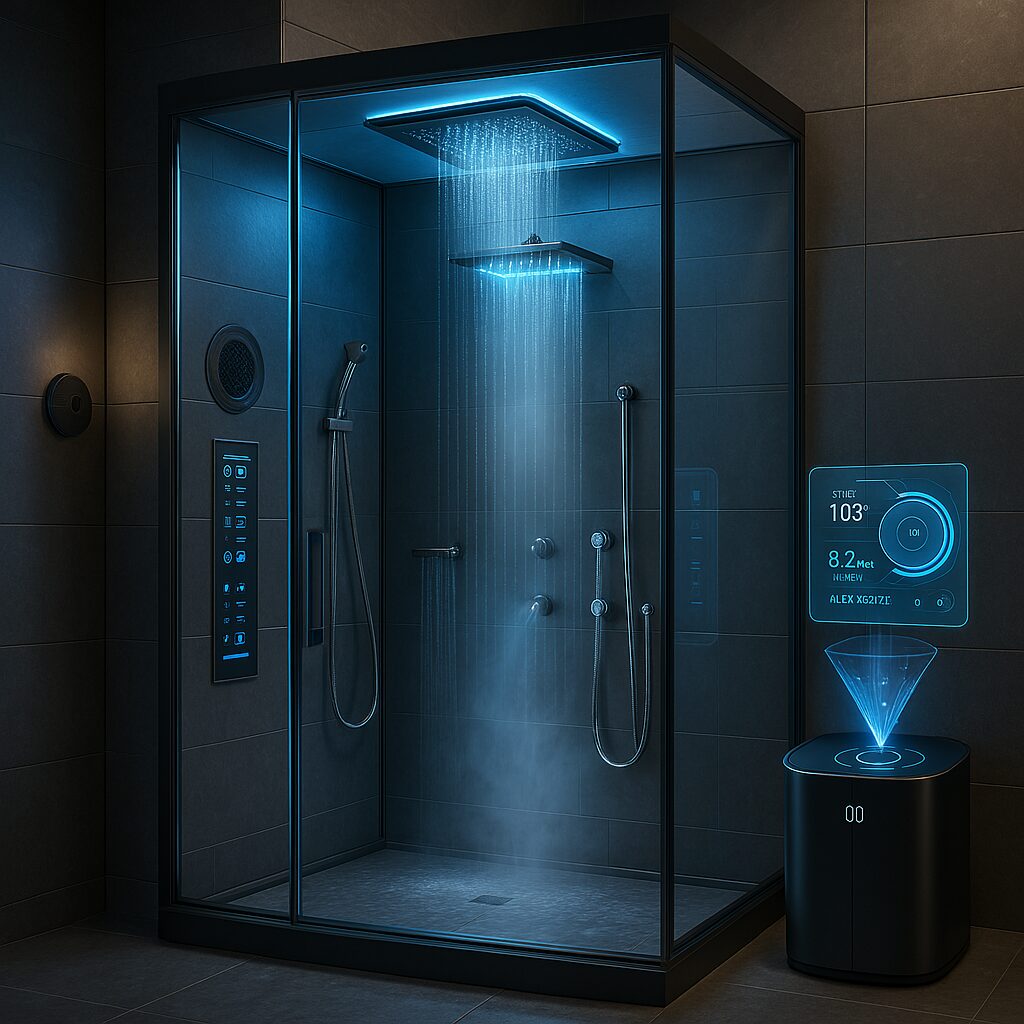
Smart Bathroom Systems
What role do smart systems play in hospitality bathrooms?
Smart systems can monitor leaks, track run times, detect abnormal water use, generate maintenance
alerts, and support energy or water reporting. The best smart bathroom systems focus on equipment
health and operational reliability rather than unnecessary guest-facing complexity.
Can smart bathrooms reduce operational costs?
Smart monitoring can reduce emergency repairs, hidden leaks, room downtime, and manual inspection
costs. It can also help engineering teams identify failing valves, sensor issues, and abnormal
run-time patterns before they become guest complaints.
How should data privacy be handled?
Smart bathroom systems should be privacy-first. Monitoring should focus on fixture status,
leaks, aggregate usage, and system health — not personal guest behavior. Secure configuration,
limited data access, and clear governance are important for trust.
Maintenance Access & Long-Term Reliability
Why is maintenance access a design priority?
Poor access increases repair time, room downtime, and labor cost. Hospitality bathrooms should
include concealed-but-accessible valves, standardized components, labeled service zones,
isolation valves, and clear replacement pathways.
What causes most bathroom failures in hotels?
Common causes include low-quality cartridges, inaccessible valves, finish damage from harsh
cleaning chemicals, poor waterproofing, drainage problems, scaling, sensor misreads, and
materials not suited to commercial cleaning cycles.
How do mockups reduce specification risk?
Mockups reveal issues that drawings often miss: splashing, glare, awkward reach, confusing
controls, poor lighting, water noise, drainage problems, and difficult service access.
AEC teams should validate prototype rooms before large-scale procurement.