
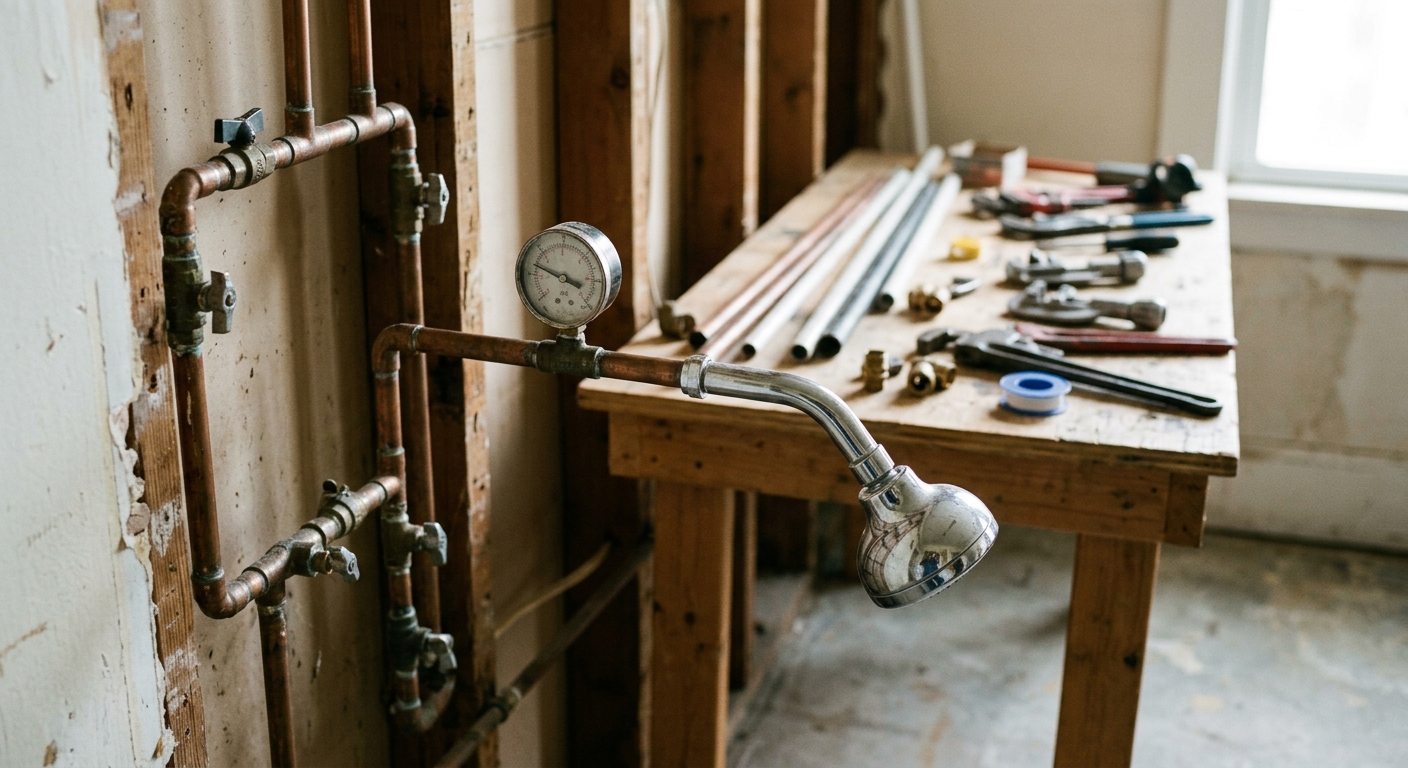
Low-flow shower heads lose perceived pressure long before they lose actual flow rate. Mineral scale narrows the aerator orifices gradually, so a head still delivering 1.8 GPM at month six can feel noticeably weaker than the same head at install, even though it hasn’t dropped below spec. The fix isn’t property-wide replacement on a fixed calendar. It’s an audit-driven schedule based on water hardness by wing, floor, and riser, because a single hotel can have three or four effective replacement cycles running at once depending on which stack feeds which rooms.
Why Perceived Pressure Drops Before Flow Rate Does
Guests judge shower performance by feel: spray pattern, droplet size, impact force. None of that is the same measurement as gallons per minute. A clean 1.8 GPM head with full orifice count distributes water across dozens of small streams at consistent velocity. As scale builds in the aerator plate, some orifices partially clog first, which concentrates flow through fewer openings. Total GPM may barely change, but the spray pattern collapses to a narrower, harder stream in some spots and a weak dribble in others. Guests read that as “the pressure is bad” when the actual problem is uneven distribution, not insufficient volume.
This matters for how you diagnose complaints. A pressure gauge reading in spec doesn’t rule out a scale problem. You need to pull the head and look at the aerator disc.
GPM Specs Versus Real Guest-Perceived Pressure
The Energy Policy Act (EPAct) caps shower head flow at 2.5 GPM at 80 PSI, and WaterSense-labeled heads are certified at 2.0 GPM or less, tested for both flow and spray force so labeled products aren’t just throttled to feel weak. California and a handful of other states mandate 1.8 GPM in new installs and renovations. Most hospitality properties standardize on WaterSense-labeled heads at 1.8 to 2.0 GPM for the dual benefit of code compliance and utility cost, but the flow number alone tells you nothing about guest experience six months post-install.
When you’re auditing a complaint, check pressure at the supply line first, not just at the head. A PSI test range of 20 to 80 covers the functional range you’ll see across most municipal and well-fed hotel systems. Anything reading under 20 PSI at the shower valve is a supply-side problem, not a fixture problem, and no head replacement will fix it. Anything in the 45 to 65 PSI range with a guest complaint of weak flow is almost always a scale or cartridge issue downstream of the valve.
How Hard Water Accelerates Aerator Clogging
Water hardness is measured in grains per gallon (GPG) or parts per million (PPM) of calcium carbonate, and it varies not just by property location but by which water main or well feeds a given wing. Properties on shared municipal supply usually see uniform hardness building-wide. Properties with multiple wells, mixed municipal and well sources, or older galvanized branch lines often see meaningfully different hardness readings floor to floor or wing to wing, which means aerator clog rates won’t be uniform either.
As a rough planning reference:
- Soft water (under 60 PPM): aerators typically hold spec performance 12 months or more before visible clogging.
- Moderately hard water (60 to 120 PPM): visible scale buildup and perceived pressure drop within 4 to 8 months is common.
- Hard water (over 120 PPM): clogging can show up in 60 to 90 days, especially in high-turnover guest rooms with daily use.
These are planning ranges, not guarantees. Actual clog rate depends on usage frequency, water temperature (hot water deposits scale faster), and the specific aerator design. The point is that a single “replace every 12 months” policy across a property with mixed hardness zones will leave some floors underserved and replace others too early.
Auditing Shower Performance Floor by Floor
Instead of reacting to individual guest complaints, run a quarterly or semi-annual audit that treats shower heads as a fleet, not a collection of individual fixtures. A basic floor-by-floor audit should include:
- Static pressure reading at the shower valve (using your 20 to 80 PSI test range) for at least one room per floor or wing.
- Visual inspection of the aerator disc for scale buildup, removed and checked, not just glanced at through the face plate.
- A flow rate check using a bucket-and-stopwatch method or an inline flow meter, compared against the head’s rated GPM.
- A hardness test (test strip or lab sample) for the water source feeding that wing, logged so you can track it against clog rate over time.
Log results by room number and floor, not just as an aggregate property average. Over two or three audit cycles, you’ll see which wings run hotter on hardness and which floors are consistently generating complaints ahead of others. That data is what lets you build a phased schedule instead of guessing.
Building a Phased Replacement Schedule
A phased schedule spreads both labor and capital cost across the year instead of hitting all rooms at once, and it prevents the operational problem of taking a large block of rooms out of guest-ready status simultaneously. Group floors or wings into replacement tiers based on your audit data:
| Tier | Hardness Profile | Suggested Cycle |
|---|---|---|
| Tier 1 (hard water wings) | Over 120 PPM | Aerator swap or full head replacement every 4 to 6 months |
| Tier 2 (moderate) | 60 to 120 PPM | Every 8 to 10 months |
| Tier 3 (soft water wings) | Under 60 PPM | Annual, tied to routine PM inspection |
Stagger tiers so you’re never doing full-property replacement in a single work order. This also gives you a rolling opportunity to evaluate modern shower heads or full valve-and-head sets as older stock ages out, rather than committing to one product line property-wide before you know how it performs against your specific water chemistry.
Cartridge and Aerator Specs That Resist Scale
Not all low-flow heads clog at the same rate even under identical water conditions. When specifying replacements, look for:
- Silicone or rubber-nozzle aerators that can be wiped clean by hand, rather than rigid plastic orifice plates that require disassembly.
- Removable, field-serviceable aerator discs, not heads where the aerator is molded into the body.
- 1/2 inch NPT thread, the standard retrofit connection for nearly all US hospitality shower arms, so replacement heads swap in without re-plumbing.
- WaterSense certification at 2.0 GPM or less, which confirms the head was tested for spray force and coverage at that flow rate, not just throttled.
Cartridge-based valves also matter here. A valve cartridge that’s scaling internally will restrict flow upstream of the head entirely, and no aerator swap will fix that. If pressure audits show a drop at the valve itself rather than just at the head, the cartridge is the likely culprit and needs its own replacement cycle, typically longer than the aerator cycle but still hardness-dependent.
Start by running one full audit cycle across every floor before committing to a phased schedule. Without that baseline data you’re guessing at tiers, and a schedule built on guesswork tends to either over-replace low-hardness wings or under-replace the hard water zones that actually generate the complaints. Once you have two audit cycles logged, the tier assignments should be defensible enough to put in front of ownership as a capital plan rather than a reactive maintenance line item.
