
Hospitality Showers · Spa System Guide
Spa Shower Systems for Hospitality What AEC Teams Must Get Right
Spa showers are no longer a “nice-to-have.” In hotels, resorts, and high-end multi-residential projects, they define the wellness experience. For AEC teams, success depends on getting hydraulics, controls, safety, and envelope detailing right from day one.
Multi-outlet systemsPlumbing coordinationGuest safety & maintenance
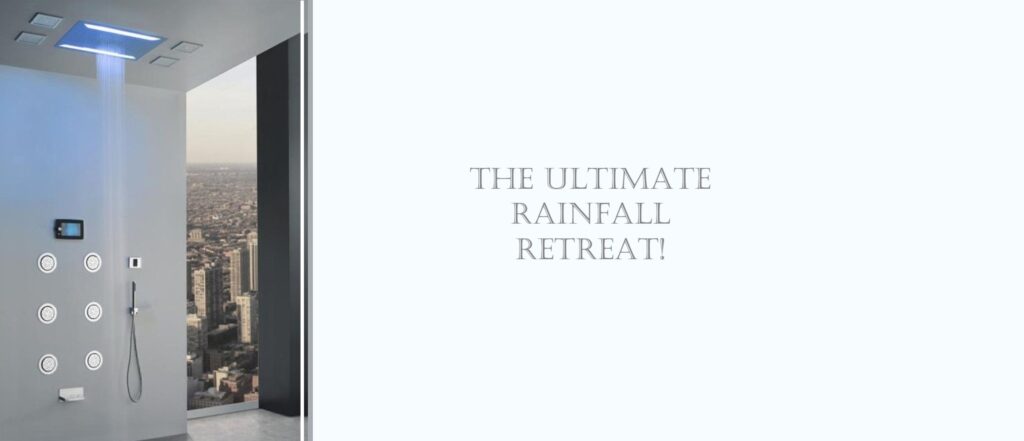
Rainfall · Body jets · Lighting coordination
How Spa Showers Differ from Standard Hotel Showers
Higher flow, more outlets, longer use, and much tighter coordination requirements.
- Multiple outlets: rainfall, handshowers, body jets, waterfalls.
- Advanced controls: thermostatic or digital interfaces.
- Higher hot-water demand and longer dwell times.
- Greater moisture, acoustic, and envelope loads.
Contents
Key coordination checkpoints for AEC teams.1) Hydraulics & mechanical design2) Controls & UX strategy3) Safety, code & accessibility4) Envelope & moisture control5) Heads, jets & components6) Room-type spa templates
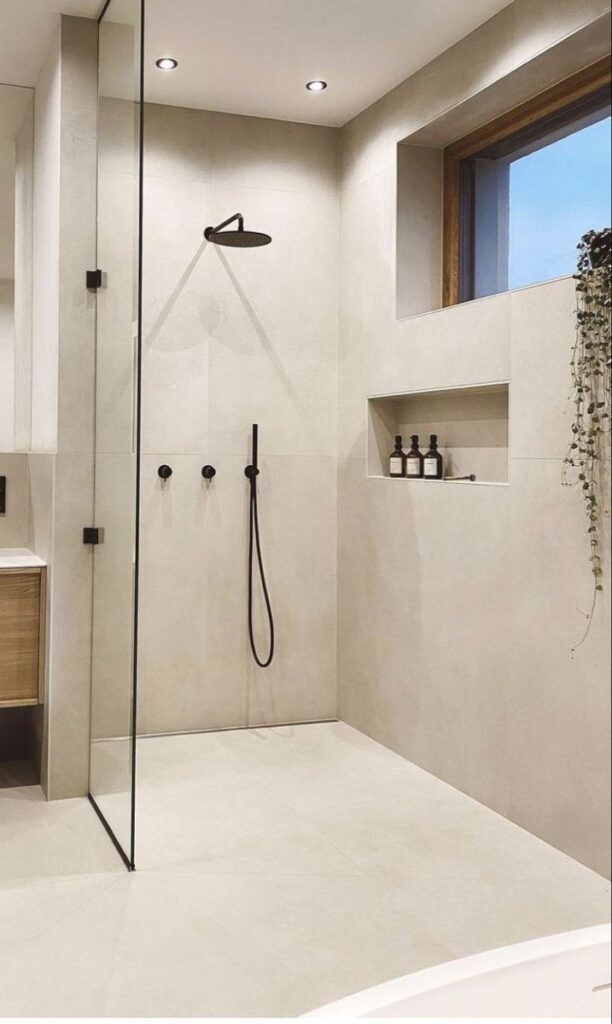
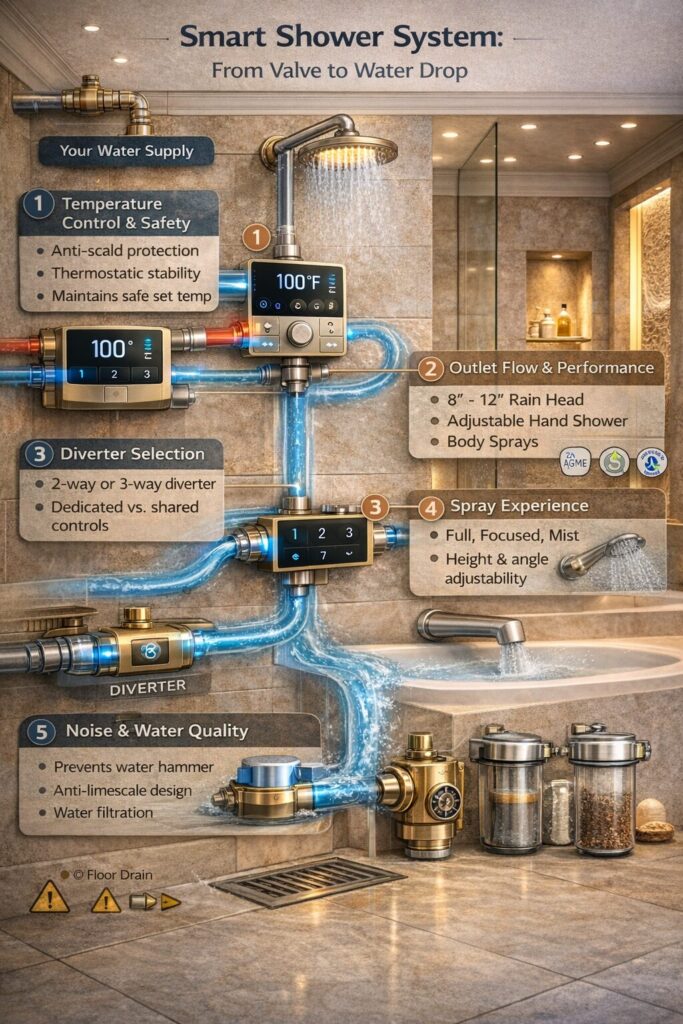
Spa hydraulics must support simultaneous outlets and long sessions.
1) Hydraulics & Mechanical Design
Verify pressure, flow, and hot-water capacity before selecting systems.
- Confirm available static and residual pressure at each floor.
- Size hot-water systems for longer spa dwell times.
- Coordinate recirculation and balancing for remote suites.
- Allow commissioning flexibility for post-opening tuning.
Digital spa controls add presets but need careful UX planning.
2) Controls & Guest UX Strategy
Interfaces should feel obvious, not experimental.
- Clear outlet labeling and intuitive icons.
- Thermostatic robustness vs. digital flexibility.
- Logical sequences: temperature first, outlets second.
- Reachable controls from the dry zone.
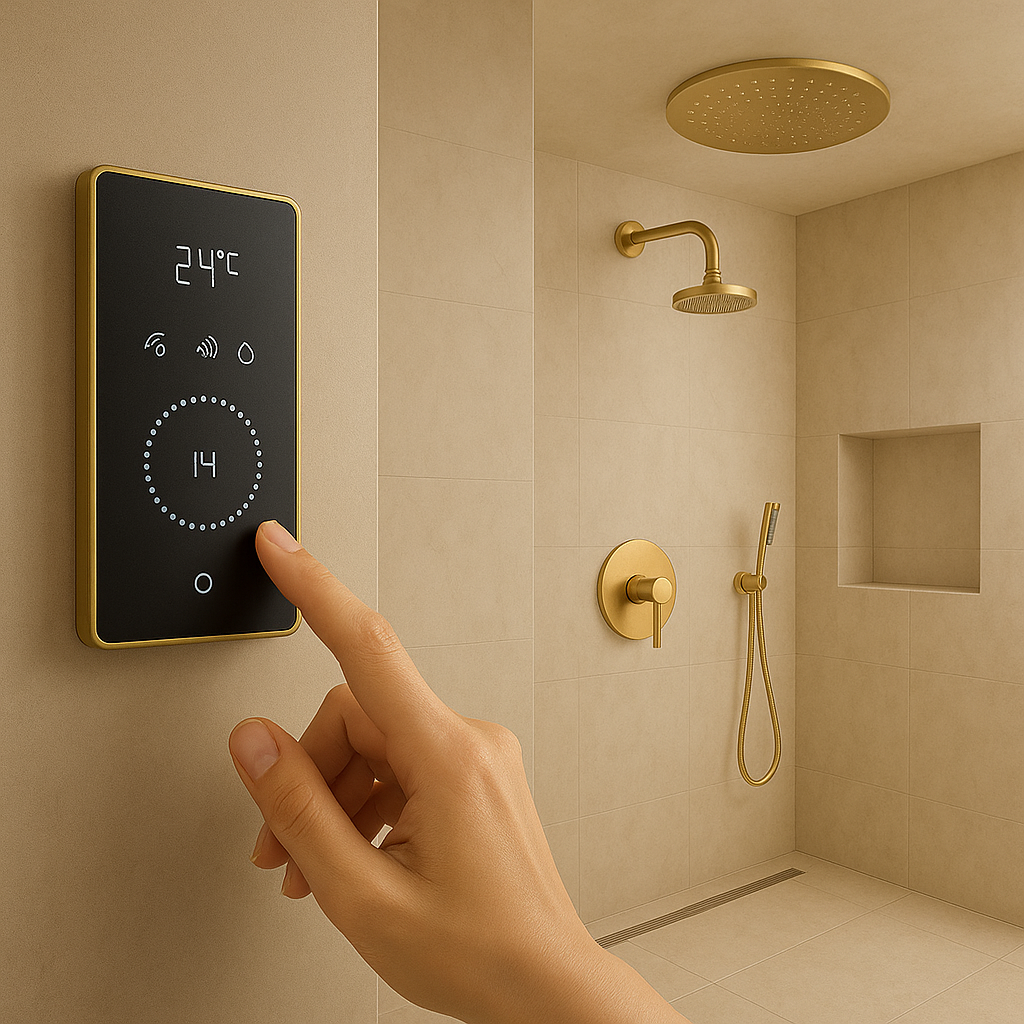
Digital spa controls add presets but need careful UX planning.
3) Safety, Code & Accessibility
Complex systems demand simple, reliable safety strategies.
- Thermostatic or digital anti-scald protection.
- Slip-resistant floors and dry-zone activation.
- Grab bars, seating, and compliant reach ranges.
- Mock-up testing of temperature limits and shutoff logic.
Digital spa controls add presets but need careful UX planning.
4) Envelope, Moisture & Acoustics
Longer showers mean more humidity and higher failure risk.
- Continuous waterproofing at floors, walls, benches.
- Exhaust sized for extended spa use.
- Acoustic separation from adjacent guestrooms.
- Steam-ready detailing if future upgrades are likely.
Digital spa controls add presets but need careful UX planning.
5) Selecting Heads, Jets & Components
Balance drama with serviceability and water use.
- Rainfall vs. waterfall performance differences.
- Selective body jets over dense grids.
- Handshowers for accessibility and cleaning.
- Pre-engineered packages reduce coordination risk.
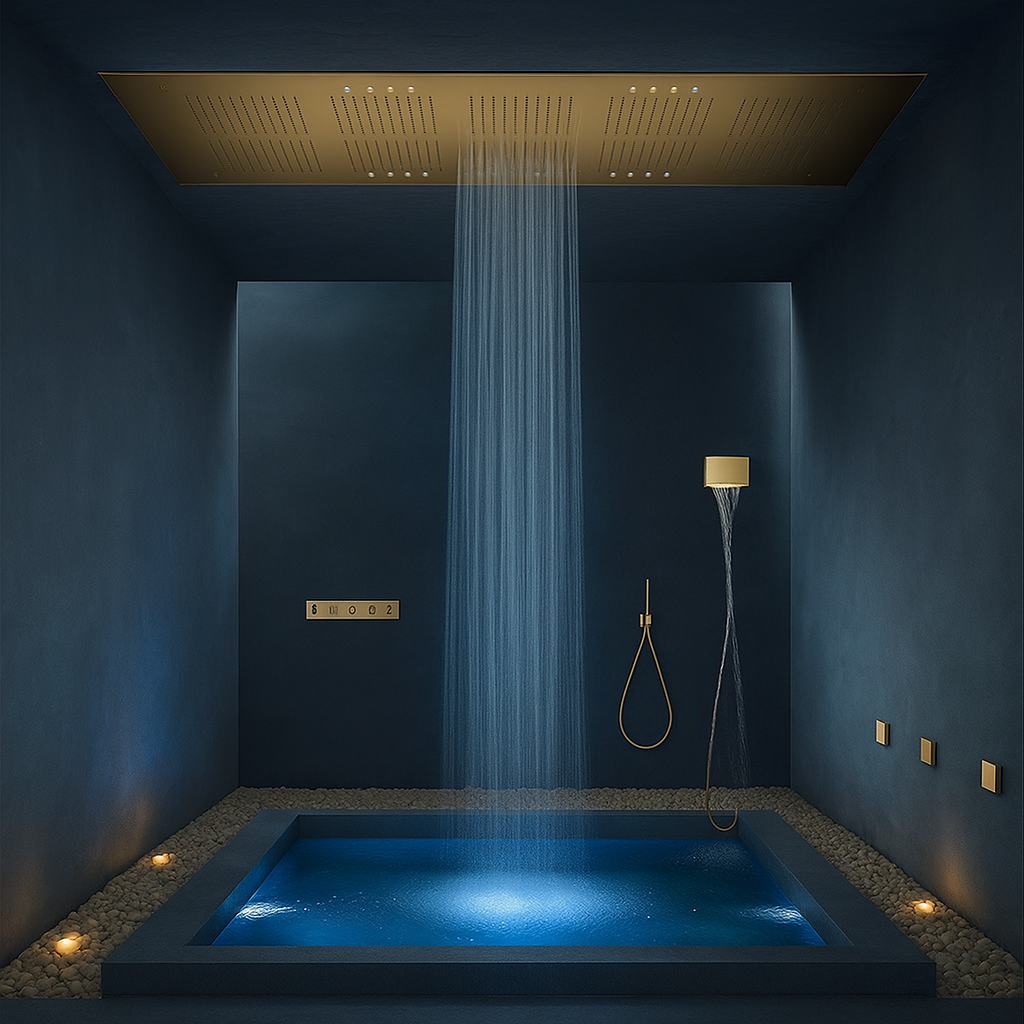
LED heads require electrical coordination and access planning.
6) Spa Shower Templates
Repeatable layouts outperform one-off designs.
- Standard spa: rainfall + handshower + thermostatic control.
- Signature / couples: multiple outlets, presets, layered lighting.
- Locker & BOH: durability, tamper-resistant trims, heavy drainage.
Digital spa controls add presets but need careful UX planning.